







Data for Everyone
Designing an AI assistant that speaks everyone's language
77%
Adoption
4.5x
Retention
10x
User personas
Rebuilding the MOSTLY AI platform — From stalled to scalable
Overview
MOSTLY AI's platform fused model training and data generation into one rigid flow. Change a setting, get more records, tweak an output, and you retrained from scratch. Enterprise deals stalled on the rigidity. New users gave up before reaching value.
I led the redesign that pulled the two apart. Train once, generate on demand. That one decision reset how the platform scaled, and how the team shipped.
Role
Lead Product Designer
Duration
Apr 2023 – Feb 2024
8 weeks to design, 30 releases to roll out
Collaborators
Product Management
Engineering, UX Research
UX Writing, QA
Tools
Figma
Hotjar
Mixpanel
Training and generation were locked in one job. No model could be reused.
Creators could train. Consumers just needed data, and hit the wall.
Treat the trained model as an asset, not a step. Train it once. Generate from it forever.
Every problem traced back to one fused job — splitting it was the decision the rest of the redesign hung on.
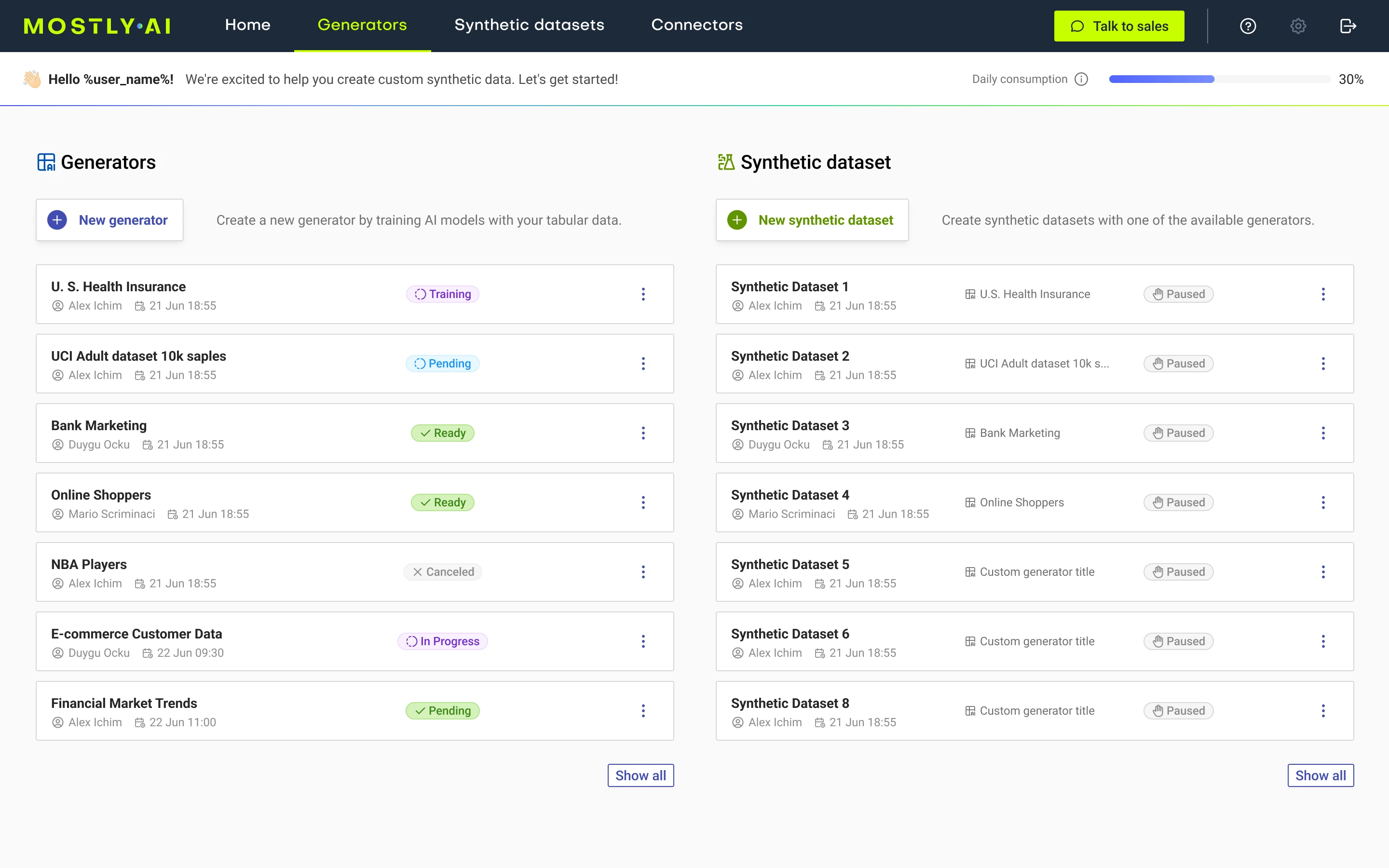
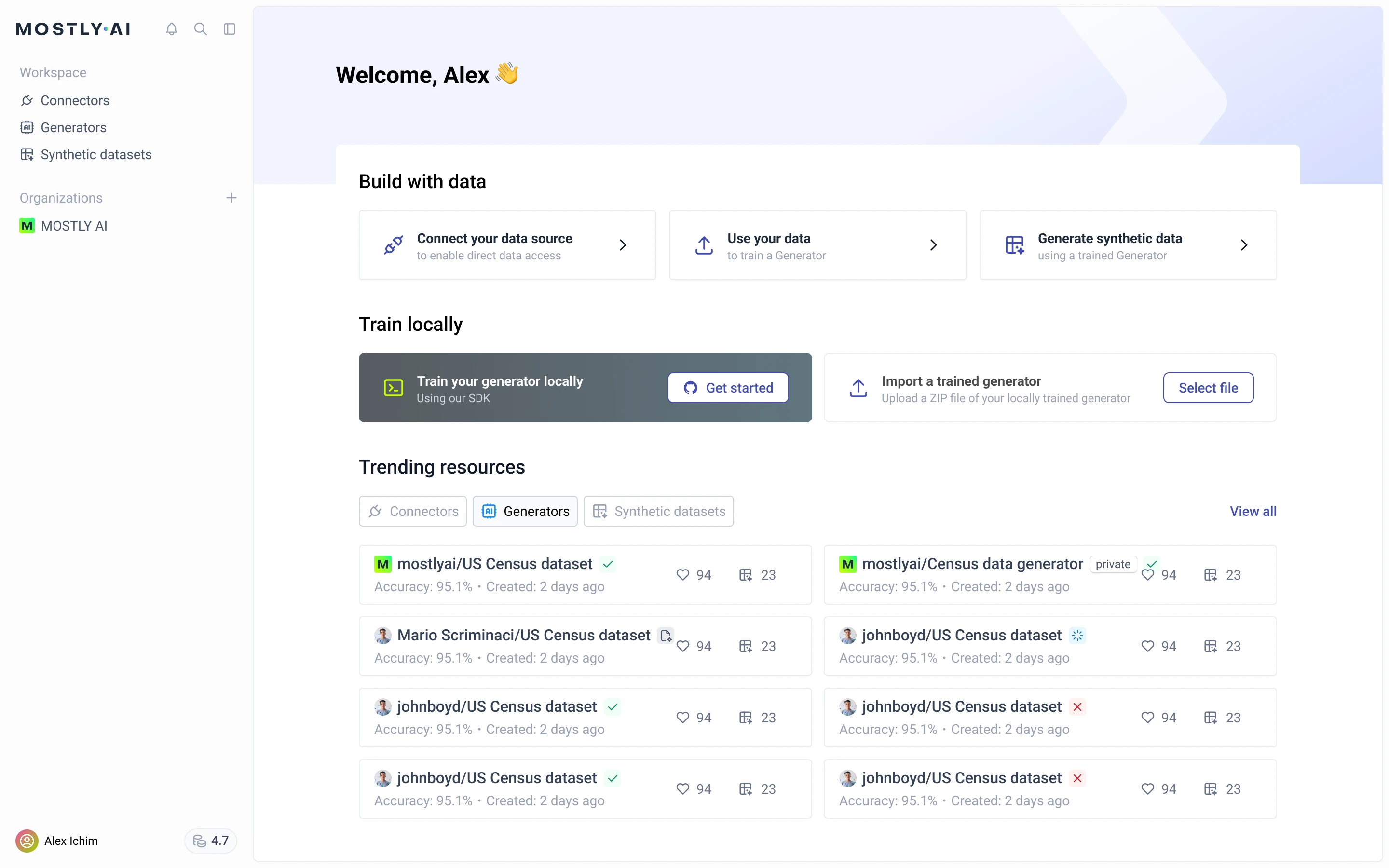
One trained model. Reused on demand, and open to anyone who needs data.
A trained model became a reusable asset. Generate again and again, with no setup for the people who just need data.
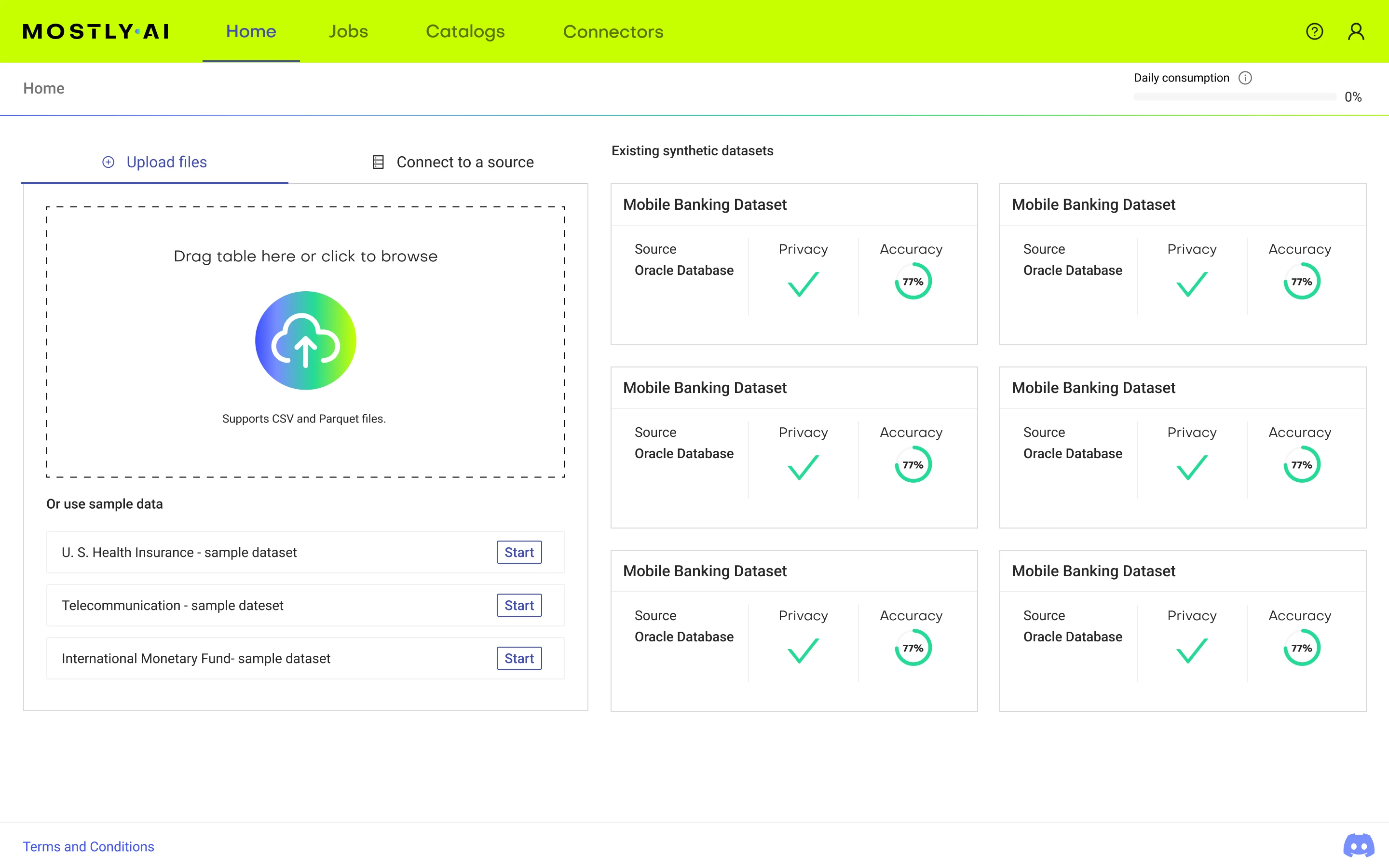
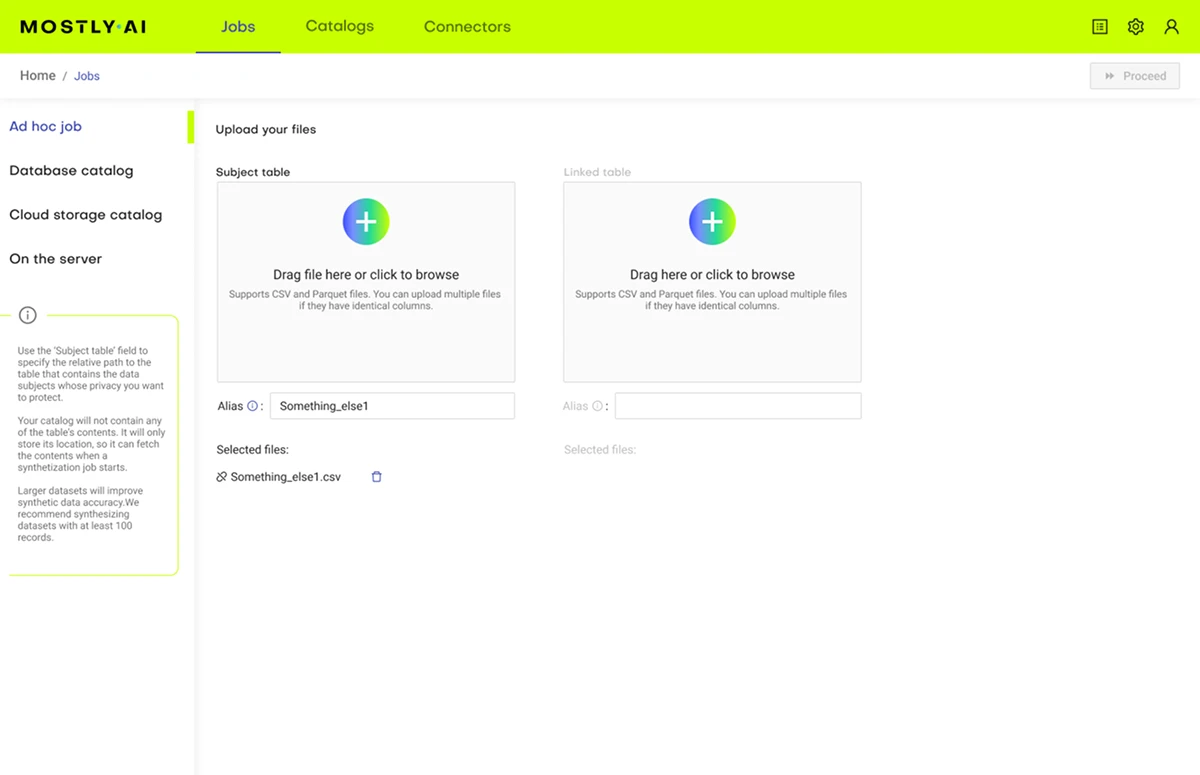
Classify every table by hand. Tune model settings. Decode what a "job" or a "catalog" even was. Then wait.
The original flow, as I found it. Every synthetic dataset started here.
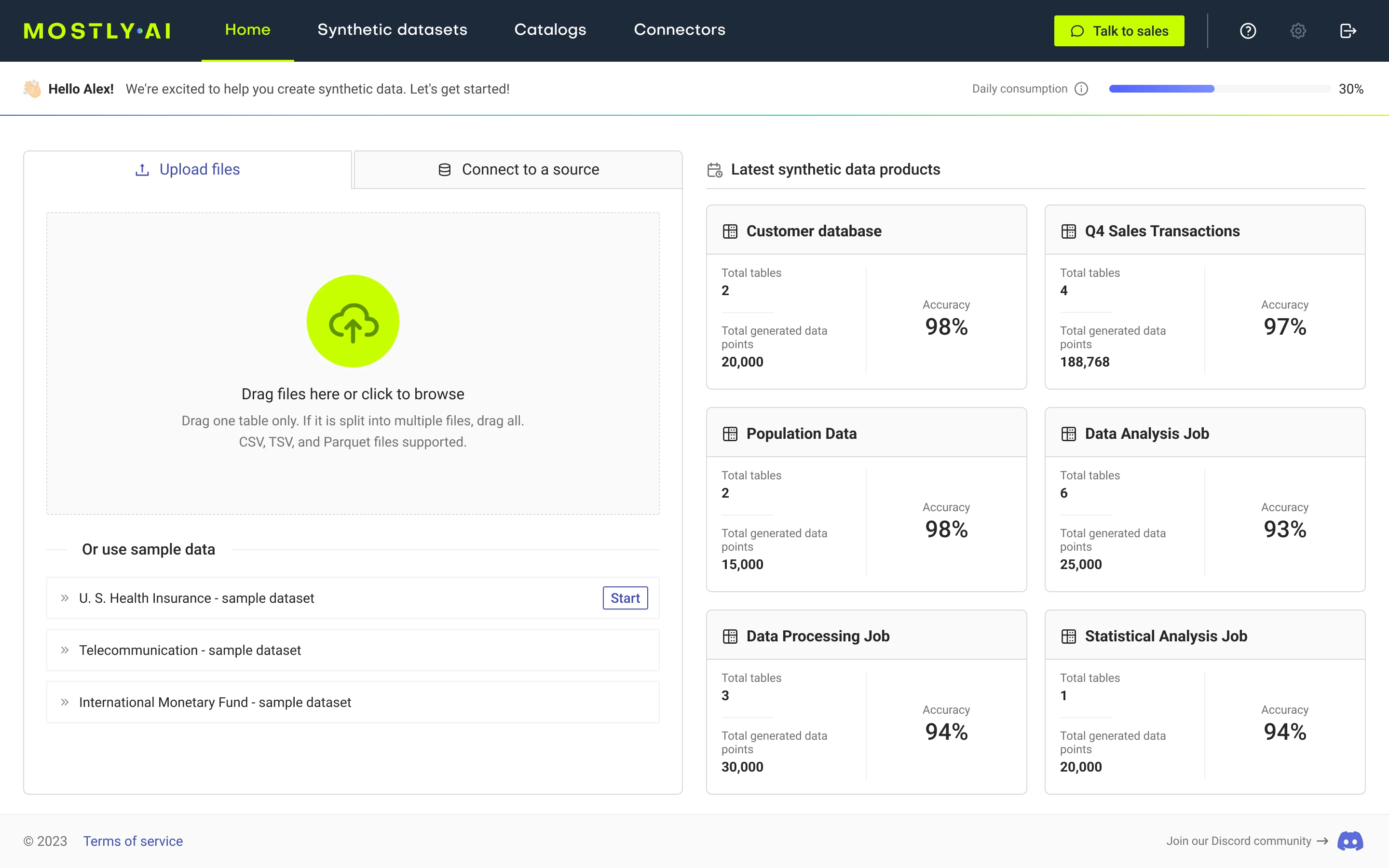
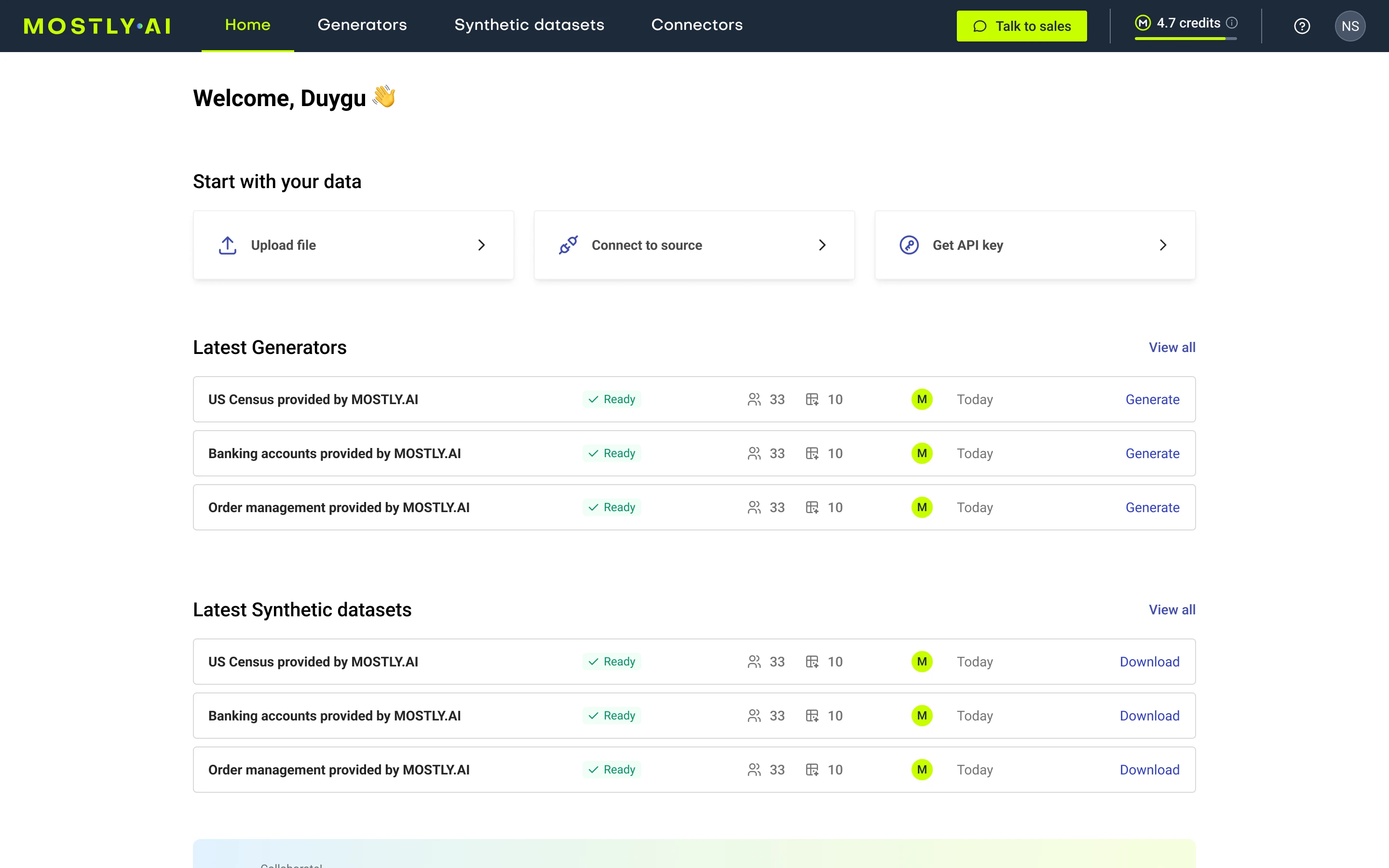
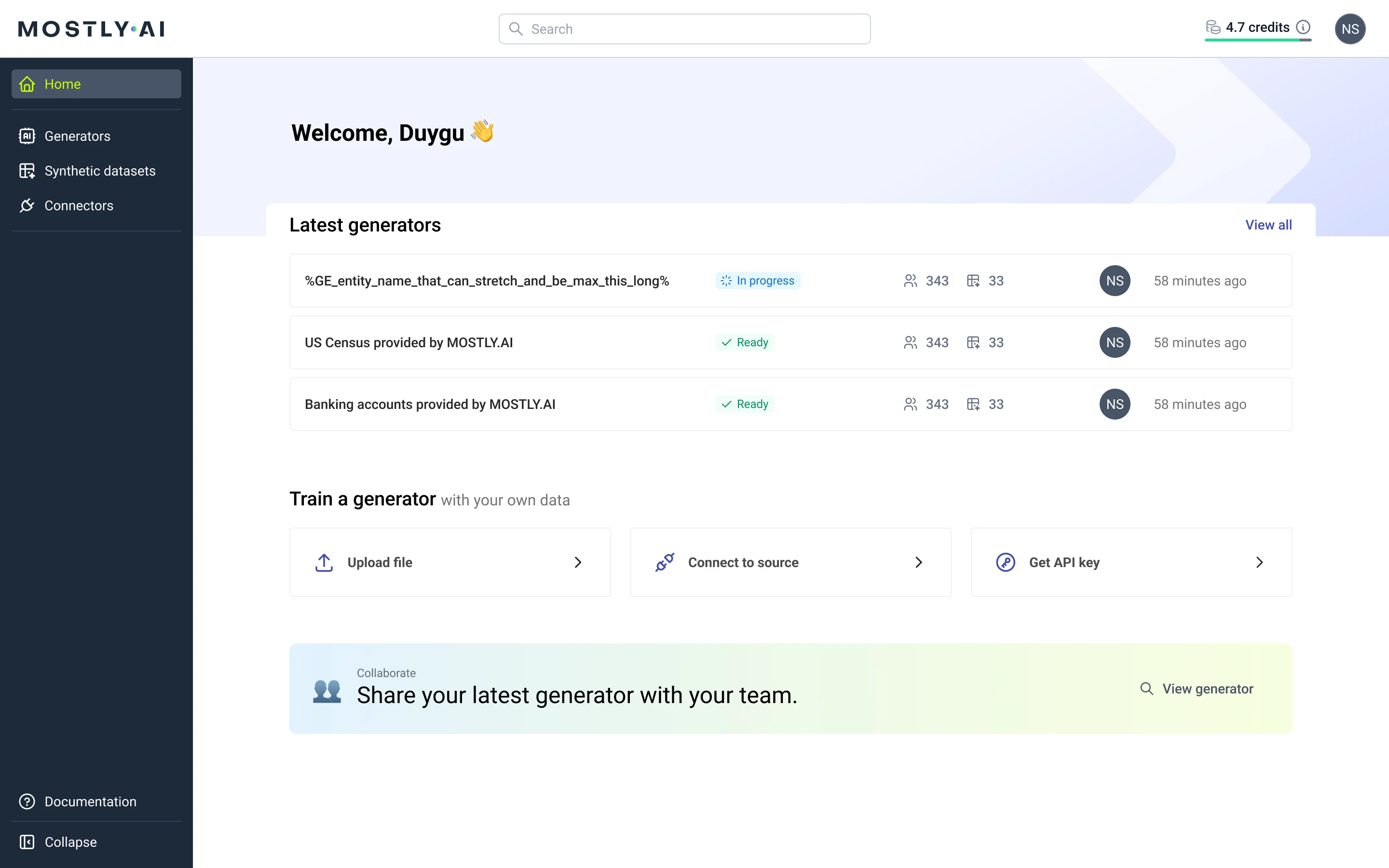
The platform does the thinking now. Auto-detected columns, defaults tuned for accuracy, the primary action always one click away.
Once just a row and a setup form. Now an object you can open, with status, details, and the generators that depend on it.
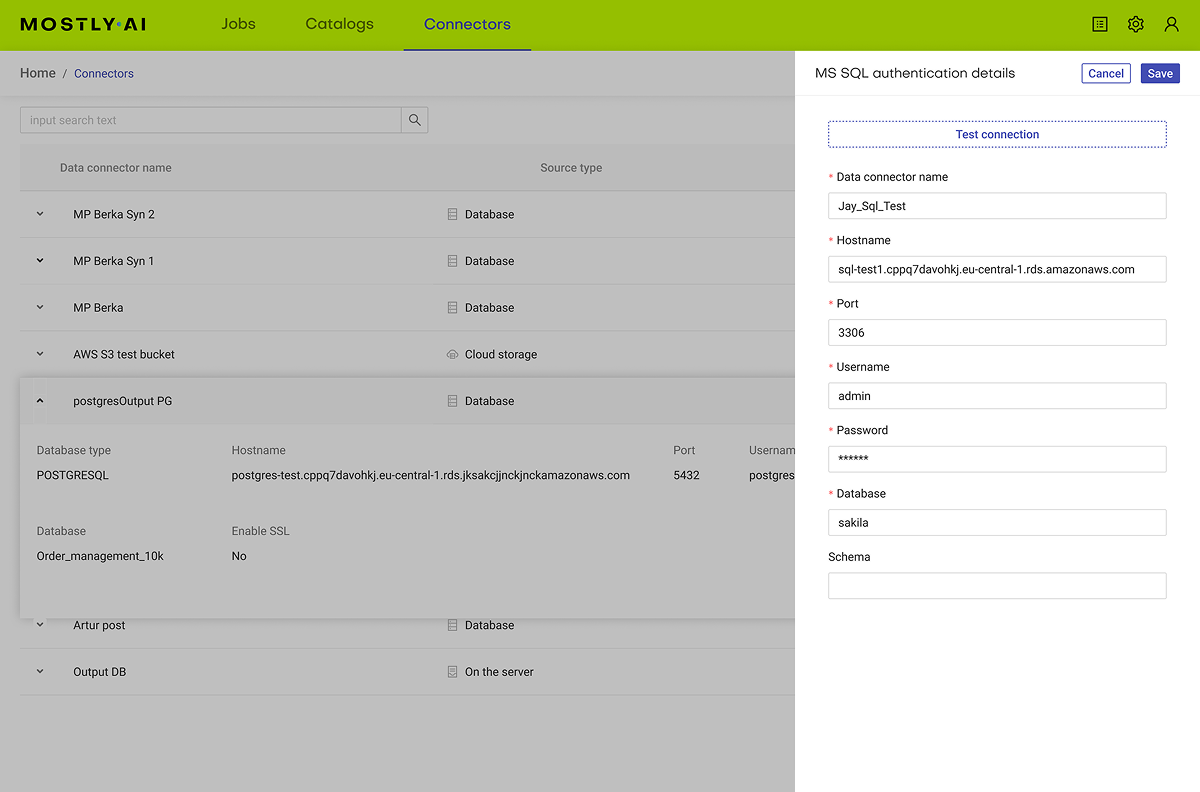
The original connector setup, then the entity page that gave connectors parity with generators and datasets.
Reuse made datasets cheap, so lists grew long. Selection, download, and delete moved to bulk.
The decoupling made datasets multiply. The interface had to keep up.
Every object, generators, connectors, datasets, and more, became a first-class entity. So one search could reach them all.
Search across eight entity types. Try it.
Decoupling made training and generation asynchronous. Notifications replaced watching a log with being told when it's done.
System-wide alerts, so nothing needs babysitting.
The old product didn't flex at all. Rebuilding it down to 450px forced a call on every element: essential, or clutter.
The team shipped in thirty small releases instead of one blocked pipeline.
Retained users grew steadily through the year as the redesign rolled out.
Task completion climbed from 18% to 53% as the redesign rolled out.
Satisfaction, measured before and after on tracking I put in place: 3.2 to 4.7 of 5.
The tight deadline, the single seam, the 320px screen, each one forced a call on what mattered. When you can't keep everything, you find out what's essential. I stopped fighting limits and started using them.
One product held experts and first-timers. The answer wasn't two products, it was smart defaults and power tucked away, ready when asked for. Simplicity wasn't fewer features. It was better decisions about what to show.
Separating training from generation shaped every flow, entity, and screen that followed. The best thing I designed here, no user ever saw directly. Structure came first. The surface followed.
The redesign wasn't a set of better screens. It was the seam no one saw.